How to Track AI Overview Rankings Over Time
Author Box

Sakshi Jaiswal
Sakshi Jaiswal, a digital marketing expert, shares cutting-edge insights and strategies. She enjoys exploring new marketing technologies and tools.
Table of Contents
Google Search is no longer just a list of ten blue links. Today, many searches begin with an AI-generated overview that provides instant answers, key insights, and links to trusted sources, often before users even scroll to the traditional search results.
This shift has fundamentally changed how people discover information online. Ranking at the top of the organic results is still important, but if your content isn’t featured in Google’s AI Overviews, you could be missing valuable visibility, clicks, and potential customers.
That’s why learning how to track AI Overviews’ rankings over time has become an essential part of modern SEO and Generative Engine Optimization (GEO). Monitoring your AI visibility helps you understand how often your content is cited, identify ranking trends, measure the impact of optimization efforts, and stay ahead as Google’s AI-powered search continues to evolve.
In this guide, you’ll learn what AI Overview rankings are, why they change, how to track them effectively, the best AI Overview rank tracking tools to use, and proven strategies to improve your long-term visibility in both traditional search results and AI-generated answers.
What Are AI Overview Rankings
Google AI Overviews (formerly Search Generative Experience, or SGE) use advanced artificial intelligence to synthesize answers directly on the search results page. Instead of pulling a snippet from just one website, the system scans multiple top-performing pages across the web and builds a consolidated, easy-to-read answer block.
When we talk about tracking AI Overview rankings, we are not measuring a static position like “Rank 3.” Instead, we track two primary visibility signals:
- Trigger Presence: Does an AI Overview appear when a user searches for your targeted keyword?
- Citation Share: Is your domain or URL included as an authoritative source link inside that AI summary?
How is AI Ranking Different from SEO Ranking
Understanding how AI rankings differ from classic organic SEO helps you measure what matters most:
| Metric/Dimension | AI Overview Rankings | Organic SEO Rankings |
|---|---|---|
| Ranking Method | Multi-source passage synthesis and AI extraction | Page relevance, backlink profiles, and domain authority |
| Search Position | Top-of-page interactive snapshot block | Sequential rankings (Positions 1 through 100) |
| Volatility Level | High; shifts based on query wording and intent | Moderate; shifts gradually over days or weeks |
| User Interaction | Quick clicks on embedded citation cards | Clicks spread across classic blue links |
| Primary Metric | Citation Rate and AI Visibility Share | Organic Rank Position and Total Impressions |
Why Tracking AI Overview Rankings Matters
Monitoring your brand’s AI search footprint is vital for maintaining steady traffic. Tracking AI summary rankings provides key strategic benefits:
- Spot Volatility Early: Google constantly tests when to show AI summaries. Tracking helps you determine whether a sudden drop in traffic is due to losing organic positions or to an AI Overview absorbing user clicks.
- Protect Market Share: Competitors with lower standard rankings can still earn primary citation cards if their content answers sub-questions more effectively.
- Fuel Modern GEO Strategies: Regular tracking lays the groundwork for Generative Engine Optimization (GEO), helping your website remain relevant across AI-first search platforms.
Key Metrics to Track in AI Overviews
To build a reliable measurement framework, focus on these practical performance indicators:
- AI Overview Appearance Rate: The percentage of your target keywords that generate an AI snapshot box.
- Citation Rate: How often your site is cited as a source link when an AI summary appears.
- Placement & Link Position: Whether your source link appears in the main summary text, carousel cards, or drop-down panels.
- Competitor Share of Voice: How often top competitors receive citations compared to your site across core topic clusters.
- Intent Coverage: Tracking whether AI Overviews trigger more frequently on informational, commercial, or local intent searches.
How to Track AI Overviews Rankings Step by Step
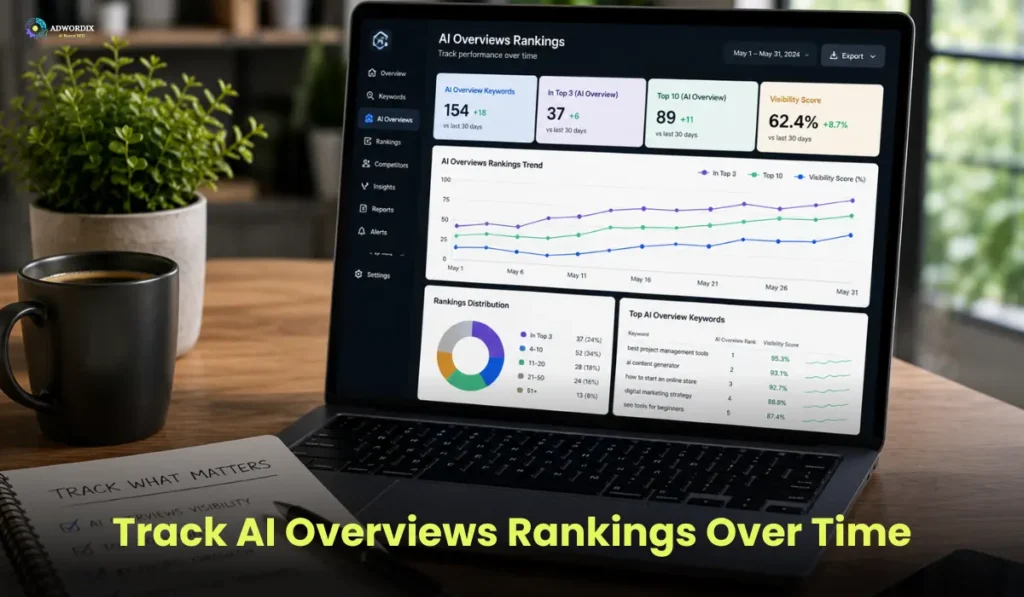
Tracking AI Overviews effectively is not about checking whether your website appears once. It requires a consistent process to monitor visibility, measure performance, and identify ranking trends over time. Follow these six steps to build a reliable tracking workflow.
Step 1: Identify Your Target Keywords
Start by selecting the keywords you want to monitor. Prioritize informational, long-tail, and question-based queries, as these are the searches where Google AI Overviews appear most frequently. Focus on keywords that are valuable to your business and aligned with your target audience’s search intent.
Step 2: Build an AI Overview Tracking List
Organize your keywords into a structured tracking sheet based on topic, search intent, location, device, and priority. This makes it easier to monitor performance, compare results, and identify trends across different keyword groups.
Step 3: Record Your Baseline Performance
Before making any optimizations, capture your current AI visibility. Note which keywords trigger AI Overviews, whether your website is cited, which pages are featured, and which competitors appear alongside you. These baseline metrics will help you measure future improvements.
Step 4: Monitor Rankings Consistently
Track your AI Overview rankings regularly using a combination of AI Overview rank-tracking tools and manual verification. Weekly monitoring is ideal for most websites, while highly competitive industries may benefit from more frequent checks to spot significant ranking changes early.
Step 5: Compare Historical Ranking Trends
Analyze your data over weeks and months to understand how your AI visibility is evolving. Monitor citation frequency, newly gained or lost AI placements, keyword movement, and competitor performance to identify patterns that influence long-term success.
Step 6: Optimize Based on Your Findings
Use the insights from your tracking reports to refine your content strategy. Update outdated information, strengthen topical coverage, improve structured data, enhance internal linking, and answer user queries more clearly. Continuous optimization helps improve your chances of earning and retaining AI Overview citations.
Best AI Overviews Rank Tracking Tools
Checking AI search results manually across hundreds of queries is time-consuming. Using a specialized AI Overview rank tracker helps streamline data collection while giving you competitive context.
| Tool | Best For | Tracks AI Overviews | Historical Tracking | Competitor Monitoring |
|---|---|---|---|---|
| ZipTie.dev | Dedicated AI search analytics | Yes (Google, ChatGPT, Perplexity) | Yes | Excellent (Citation Share & Overlays) |
| SE Ranking | All-in-one SEO agency suite | Yes | Yes | Good (SERP feature historical flags) |
| Semrush | Position tracking & SERP features | Yes | Yes | Good (SERP overlay reports) |
| Ahrefs | Backlink & technical SERP audits | Yes | Yes | Moderate (SERP snapshot archives) |
| Profound/Scrunch AI | Enterprise GEO monitoring | Yes | Yes | Excellent (Multi-engine AI tracking) |
| Google Search Console | Free native performance data | Yes (AI Performance reports) | Yes (Limited to 16 months) | None (First-party data only) |
Using dedicated AI ranking-tracking tools like ZipTie or SE Ranking helps you track AI Overviews rankings effectively and receive automatic alerts when citation placements change.
Can You Automate AI Overview Tracking
Yes, you can automate AI Overview tracking.
The modern rank tracker for AI Overviews software uses automated headless browser queries to scan your target search engine results daily or weekly. These tools record raw HTML data, extract citation sources, and capture visual snapshots of the search page.
Recommended Automation Workflow:
- API Integration: Connect rank tracking platforms to Google Looker Studio or your internal reporting dashboard.
- Custom Alerts: Set up automated email notifications whenever your domain loses a citation on a high-value keyword.
- Scheduled Exports: Export Google Search Console performance reports monthly to cross-reference traffic shifts with automated rank tracker data.
Factors That Affect AI Overview Rankings Over Time
Understanding why citations fluctuate helps you troubleshoot traffic changes quickly:
- Google Algorithm Updates: Core updates to underlying AI models directly alter how search systems summarize answers.
- Content Freshness: Pages featuring recent statistics, updated publication dates, and original insights earn more frequent citations.
- Entity & Topical Authority: Deeply connected content clusters signal clear expertise to AI models.
- Passage Readability: Concise summary passages (between 45 and 150 words) placed under clear headers are easier for AI engines to pull into answers.
- Schema Markup & Site Health: Valid Schema.org markup helps search bots accurately classify page elements. Maintaining robust technical health ensures crawlers can track SEO progress across your pages without hitches.
How to Analyze AI Ranking Trends
Interpreting performance data correctly keeps your strategy on track. When analyzing historical AI search reports, pay attention to these core trend signals:
| Trend Metric | What It Indicates | Strategic Action |
|---|---|---|
| Declining Citation Rate | Competitors have created better-structured, direct answers. | Update heading answers and add concise summaries. |
| Fluctuating Trigger Rate | Google is testing SERP layouts for specific query intents. | Monitor organic rank stability alongside AI features. |
| Drop in Referral Traffic | AI summary text directly satisfies search intent. | Optimize meta hooks and offer deeper-value downloadable assets. |
| New Citation Earnings | Content formatting changes match AI extraction preferences. | Scale effective layout patterns across similar pages. |
If you are a business owner and don’t want to keep track of your AI ranking or trends, you can also hire an AI SEO company in India like Adwordix that can help you rank, track, and follow the trends.
How to Improve AI Overview Rankings
If your pages lose citations, apply these straightforward optimization steps:
1. Place Direct Answers First
Include a concise 2-to-3 sentence summary immediately below your primary H2 or H3 headings. This creates an easily extractable passage for AI engines.
2. Format Content with Tables and Bullet Points
Organize information using bullet lists, step-by-step guides, and comparative HTML tables. Search algorithms favor structured formatting when synthesizing snapshot answers.
3. Feature Original Research and Statistics
Include proprietary survey results, expert quotes, and original data points. AI models prioritize primary source material over generic, rewritten articles.
4. Strengthen Internal Link Connections
Ensure core resource pages receive relevant contextual internal links from high-authority articles across your site.
AI Overview Tracking Across Industries
Search behavior and citation formats vary across business models:
- Local Businesses: Focus tracking on location-specific queries (e.g., “best commercial electrician near me”). Check whether local schema details and Google Business Profile information appear in AI summaries.
- E-Commerce Brands: Monitor buyer-intent queries and product comparisons. Ensure pricing details, customer ratings, and inventory status display accurately in AI product cards.
- SaaS & Tech Companies: Track comparison and review queries (e.g., “best project management software”). Focus on getting user guides and feature documentation cited in technical answers.
- Healthcare & Legal Services: Prioritize trust signals. Track medical or legal queries to verify that cited content features verified expert bios and direct professional reviews.
Common Mistakes When Tracking AI Overview Rankings
Avoid these frequent monitoring mistakes:
- Only Watching Organic Blue Links: Ignoring AI snapshots leaves you blind to search traffic drops caused by AI summaries sitting above traditional results.
- Tracking Too Few Keywords: Monitoring only a handful of brand terms masks broader trends happening across conversational long-tail queries.
- Ignoring Device & Location Differences: AI Overviews vary significantly between desktop and mobile devices and across locations.
- Skipping Visual SERP Archives: Without visual search page archives, it is hard to analyze how competitor content formatting evolved to claim your citation spot.
Pro Tip: Hire the best SEO agency in Gurgaon to avoid the hassle and have the proven strategies working for your business.
Core AI Search Metrics Dashboard
To present search performance clearly to stakeholders, build a dashboard in Looker Studio or Google Sheets featuring these key metrics:
| Dashboard Metric | What It Measures | Why It Matters |
|---|---|---|
| AI Visibility Rate | % of target keywords showing AI Overviews | Measures total AI footprint across your keyword set |
| Citation Share | % of AI summary boxes citing your domain | Highlights how effectively your content earns source links |
| Active Citation Count | Total count of live-cited URLs | Shows total content reach within AI search blocks |
| Lost Citation Count | URLs displaced by competing sites | Triggers immediate content optimization alerts |
| AI Referral Traffic | Organic sessions originating from AI features | Measures actual traffic and revenue impact |
Best Practices for Long-Term AI Ranking Tracking
Follow this practical checklist to maintain robust AI rank tracking over time:
- Monitor weekly: Run automated audits for high-revenue terms every 7 days.
- Track both AI and organic positions: Always evaluate traditional rank alongside citation placement.
- Use multiple tracking tools: Pair automated tools like ZipTie with first-party Google Search Console data.
- Archive monthly SERP reports: Store visual snapshots to track long-term layout shifts.
- Audit competitor citations: Analyze competitors whenever they displace your cited links.
- Refresh declining content: Update statistics, schema, and direct answer passages every 3 to 6 months.
The Future of AI Overview Rank Tracking
AI search is moving rapidly toward personalized, multimodal, and conversational user experiences.
As search engines integrate text, voice, and image inputs, tracking tools will evolve to measure brand sentiment and answer placement depth alongside traditional clicks.
By setting up a reliable tracking framework today using AI SEO services, you ensure your content remains discoverable, trusted, and cited wherever your customers search.
Conclusion
As AI-powered search continues to reshape how people discover information, tracking rankings goes far beyond monitoring traditional blue links. Learning how to track AI Overviews rankings over time helps you measure your real search visibility, understand why rankings change, and uncover opportunities to earn more AI citations.
By combining the right tracking tools, meaningful performance metrics, and continuous content optimization, you can stay ahead of search trends and build a stronger presence in both Google Search and AI Overviews. In the age of AI search, success isn’t just about ranking it’s about being the answer users and AI trust.
Table of Contents
Ready to
Work with us?
Frequently Asked Questions
How often should I check AI Overview rankings?
Weekly monitoring is suitable for most websites because it helps identify meaningful trends without overreacting to daily fluctuations. However, businesses in competitive industries, news, or e-commerce may benefit from daily tracking, especially after publishing new content or during major Google algorithm updates.
Why do AI Overview rankings change?
AI Overview rankings change because Google continuously evaluates content quality, search intent, topical relevance, user behavior, content freshness, algorithm updates, and competing sources. Regularly updating valuable content and maintaining strong topical authority can improve long-term AI visibility.
How is AI ranking different from SEO ranking?
Traditional SEO rankings measure where a webpage appears in organic search results, while AI rankings focus on whether your content is selected and cited within AI-generated responses. A page can rank highly in organic search without appearing in AI Overviews, making both metrics important to track.
What factors affect AI Overview rankings?
Several factors influence AI Overview rankings, including content quality, E-E-A-T signals, topical authority, structured data, semantic relevance, user intent alignment, internal linking, content freshness, and authoritative external references. Google also considers query context and evolving AI models when selecting sources.
Which is the best AI Overviews rank tracker?
The best AI Overviews rank tracker depends on your goals. Enterprise businesses often prefer platforms with historical reporting and competitor analysis, while small businesses may choose tools that combine AI Overview tracking with traditional SEO metrics. Select a solution that provides reliable AI visibility monitoring and trend analysis.
Does Google Search Console track AI Overviews?
Google Search Console reports overall search performance but does not currently provide a dedicated report for AI Overview citations or rankings. To accurately track AI Overviews, combine Search Console insights with specialized AI Overview rank-tracking tools that monitor AI-generated search results.
How can I improve my AI Overview rankings?
Create comprehensive, trustworthy content that answers user questions clearly, demonstrates expertise, and aligns with search intent. Improving semantic relevance, adding structured data, strengthening internal links, updating content regularly, and building topical authority can increase your chances of being cited in AI Overviews.
Can local businesses track AI Overview rankings?
Yes. Local businesses can track AI Overview rankings by monitoring location-based keywords, service queries, and branded searches. Measuring AI visibility alongside local SEO performance helps determine whether your business is appearing in AI-generated answers for nearby customers.
Should I track AI and organic rankings together?
Yes. Tracking both AI Overview and organic rankings provides a complete view of your search visibility. While organic rankings measure traditional SERP performance, AI Overview tracking shows whether your content is being referenced in AI-generated answers, helping you refine both SEO and GEO strategies.
How can I track traffic from Google AI Overviews?
There is currently no dedicated report that isolates traffic from Google AI Overviews. Instead, monitor changes in organic clicks, impressions, CTR, landing page performance, branded searches, and query-level trends in Google Search Console alongside analytics platforms to estimate the impact of AI Overview visibility.
Why isn't my website showing in AI Overviews?
Your website may not appear in AI Overviews if the content lacks depth, topical authority, strong E-E-A-T signals, or clear answers to user queries. Weak technical SEO, outdated information, poor internal linking, and limited semantic coverage can also reduce the likelihood of being cited.
How do I optimize my website for AI Overviews?
Optimize your website by publishing authoritative, intent-focused content that directly answers user questions, covers topics comprehensively, and uses logical heading structures. Combine this with structured data, strong internal linking, content freshness, credible sources, and technical SEO best practices to improve AI Overview visibility.